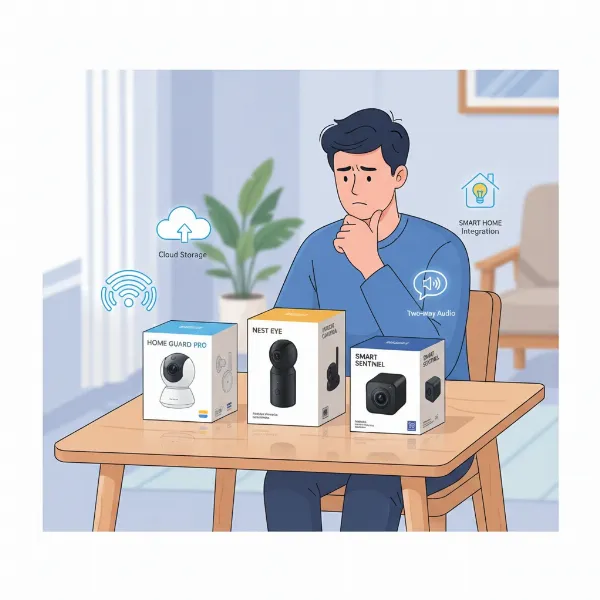
Protecting your home and loved ones is a top priority, and security cameras have become an indispensable tool in achieving that peace of mind. But when it comes to safeguarding your indoor spaces, you’re faced with a choice: a traditional, visible indoor security camera or a covert, hidden camera. Each offers distinct advantages and disadvantages, tailored to different security needs and preferences. This article will meticulously compare visible indoor security cameras and hidden cameras, delving into their features, applications, and crucial legal considerations, to help you make the most informed decision for your unique home security strategy.
Understanding Indoor Security Cameras
An indoor security camera is a surveillance device designed to monitor the interior of a home or business. These cameras are typically visible, featuring distinct housings that signal their presence, acting as both a recording tool and a visual deterrent. Their primary purpose is to provide continuous monitoring, record incidents, and offer a sense of safety to occupants by openly displaying that the premises are under surveillance.
Indoor security cameras are crucial for home protection for several reasons. They can deter potential intruders, monitor children or pets, keep an eye on elderly family members, and provide valuable evidence in the event of a break-in or other incident. Their open presence can significantly reduce the likelihood of criminal activity, with some studies suggesting a reduction in crime by up to 50% in homes with visible cameras.
Common applications include monitoring entryways, living rooms, nurseries, and other general indoor spaces where open surveillance is desired and expected. They are ideal for situations where a clear deterrent is as important as recording capability.
Understanding Hidden Cameras
Hidden cameras, often referred to as spy cameras or covert surveillance devices, are specifically designed to capture video footage without being easily noticed. These cameras are ingeniously integrated into everyday objects like smoke detectors, USB chargers, clocks, or even pens, allowing them to blend seamlessly into residential or commercial environments. Unlike their visible counterparts, hidden cameras prioritize concealment, ensuring that subjects are unaware they are being recorded.
The importance of hidden cameras lies in their ability to record behavior without altering it. They are invaluable for gathering unbiased evidence of theft, misconduct, or to discreetly monitor caregivers (nanny cams) or employees without alerting the subject. This covert nature makes them difficult to tamper with or vandalize, as their presence is unknown.
Applications for hidden cameras often involve sensitive situations where discretion is paramount. These can include investigating suspected theft by a cleaning service, monitoring a caregiver for elder or childcare abuse, or documenting internal issues within a household or small business without causing immediate confrontation or changing the behavior of those being observed.
Key Differences: Indoor Security Camera vs. Hidden Cameras
The choice between an indoor security camera and a hidden camera boils down to several fundamental distinctions in their design, purpose, features, and the legal and ethical landscapes surrounding their use.
Visibility and Design
|
Our Picks for the Best Indoor security camera in 2026
As an Amazon Associate I earn from qualifying purchases.
|
||
| Num | Product | Action |
|---|---|---|
| 1 | Blink Mini - Compact indoor plug-in smart security camera, 1080p HD video, night vision, motion detection, two-way audio, easy set up, Works with Alexa – 1 camera (White) |

|
| 2 | Cinnado Security Camera Indoor-2K 360° WiFi Cameras for Home Security,Pet/Dog/Baby Camera with Phone app, 2-Way Audio, Night Vision, 24/7 SD Card Storage, Works with Alexa & Google Home (2.4Ghz)-D1 |
|
| 3 | Blink Mini 2K+ (newest model) – Plug-in Home & Pet Indoor Security Camera with 2K video resolution, night vision, enhanced audio, motion detection – 2 cameras (Black) |
|
| 4 | TP-Link Tapo 1080P Indoor Security Camera for Baby Monitor, Dog Camera w/Motion Detection, 2-Way Audio Siren, Night Vision, Cloud & SD Card Storage, Works w/Alexa & Google Home (Tapo C100) |
|
| 5 | Ring Indoor Cam, Home or business security in 1080p HD video, White |
|
| 6 | GNCC 2K Security Cameras 4pcs, Home Security Camera Indoor with 360° Motion Detection for Pets/Baby/Dog, Two-Way Audio, Night Vision, 24/7 SD Card Storage, Cloud Storage, Compatible with Alexa |
|
| 7 | AOQEE 2K Cameras for Home Security-Outdoor/Indoor Camera for Dog/Cat/Pet/Nanny/Baby/Elderly, Color Night Vision, White Light, Siren, 24/7 SD Recordings, Works with Alexa, Plug in (C1-White-2pack-2.4G) |
|
| 8 | Tapo 2K Indoor Pan/Tilt Wired Security Camera - Works as a Baby Monitor & Pet Camera, Motion Detection, 2-Way Audio, Siren, Night Vision, No-Subscription Local Storage or Optional Cloud, C211 (2-Pack) |
|
| 9 | Ring Indoor Cam Plus (newest model), Home or business security, Retinal 2K for crisp, true-to-life video quality, 4x Enhanced Zoom, Low-Light Sight, White |
|
| 10 | Tapo 1080P Indoor Wired Security Camera - Works as a Baby & Pet Monitor, Motion Detection, 2-Way Audio, Siren, Night Vision, Subscription-Free Local or Optional Cloud, Works with Alexa, C100(4-Pack) |
|
The most apparent difference lies in their visibility. Indoor security cameras are designed to be seen, often featuring prominent housings like domes or bullets, or sleek, modern designs that are clearly identifiable as cameras. This overt design serves a primary function: deterrence. Their presence alone can make potential intruders think twice.
Hidden cameras, on the other hand, are engineered for complete discretion. They are miniaturized and integrated into common household items, making them virtually indistinguishable from the objects they mimic. This concealment is their core strength, allowing them to record events without altering the behavior of the people being monitored.
Purpose and Use Cases
The differing designs dictate distinct purposes. Visible indoor security cameras are best suited for:
- Deterrence: Their overt presence discourages crime.
- General Monitoring: Openly observing main living areas, children’s playrooms, or pet activity.
- Peace of Mind: Providing a visible assurance of security for occupants and visitors.
Hidden cameras excel in scenarios requiring subtlety:
- Discreet Evidence Collection: Capturing footage of suspected misbehavior, theft, or abuse without tipping off the perpetrator.
- Nanny Cams: Monitoring caregivers without their knowledge (though legal considerations are paramount here).
- Observing Unaltered Behavior: Documenting situations where visible cameras might change how people act.
Features and Functionality
While both types record video, visible indoor security cameras typically offer a broader range of advanced features due to fewer size constraints. These often include:
- Higher Resolution: Often providing 4K to 8MP resolution with advanced image processing.
- Pan-Tilt-Zoom (PTZ): Mechanical control to remotely adjust the camera’s field of view.
- Two-Way Audio: Allowing for communication through the camera.
- Better Night Vision: More powerful infrared arrays for extended range.
- Wider Fields of View: Less restricted by physical design.
- Wired Power/Storage: Often Power over Ethernet (PoE) or direct electrical, ensuring continuous, reliable operation and larger local storage.
Hidden cameras, constrained by their compact design, often have limitations:
- Fixed Position: Most are fixed-angle devices, unable to pan, tilt, or zoom.
- Lower Resolution/Limited Night Vision: While many offer decent HD quality and some night vision, they generally don’t match the top-tier performance of larger, visible cameras.
- Battery Dependence: Many are battery-powered for portability, leading to limited runtime (8-24 hours typically) and requiring frequent recharging.
- Storage: Often rely on microSD cards, with loop recording as an option.
Legal and Ethical Considerations
The use of hidden cameras raises significant legal and ethical questions that are crucial to understand. While federal law in the U.S. doesn’t explicitly prohibit hidden cameras, the Fourth Amendment (protection against unreasonable searches) and federal wiretapping laws (Electronic Communications Privacy Act, ECPA) do apply, particularly concerning audio recordings.
State laws vary considerably but generally focus on:
- Location: It is almost universally illegal to record video with hidden cameras in areas where individuals have a “reasonable expectation of privacy,” such as bathrooms, bedrooms, and changing rooms.
- Consent for Audio: Many states require at least one party’s consent to record conversations, and some “all-party consent” states make audio recording much more restrictive. This means even if video is legal, recording audio might not be.
- Workplace: Employers may use hidden cameras for legitimate business purposes but must balance this with employee privacy rights, often prohibiting recording in private areas like restrooms.
- Intent: Using footage for malicious purposes is illegal in all settings.
“The most effective security system usually combines hidden and visible cameras, matched to your layout, your risks, and your state’s laws.”
For visible cameras, privacy concerns are generally lower as their presence implies a lack of privacy expectation, but placement should still be respectful and avoid overly intrusive angles, especially in private residences where guests might be present.
Choosing the Best: When to Use Which
Deciding between an indoor security camera and a hidden camera depends entirely on your specific security objectives and the environment you wish to monitor.
When an Indoor Security Camera is Best
An indoor security camera is the ideal choice when your primary goal is overt monitoring and crime deterrence. Its visible presence serves as a strong psychological barrier, often causing potential intruders to avoid your property altogether.
- Deterrence is Key: If you want to make it clear that your home is under surveillance to discourage illicit activity, a visible camera is highly effective.
- Comprehensive Coverage: For open areas like living rooms, entryways, or hallways, where you want broad, reliable monitoring with a full suite of features like PTZ, two-way audio, and continuous recording.
- Visitor/Employee Awareness: When you are comfortable with guests, nannies, or other service providers knowing they are being recorded.
- Ease of Maintenance: Visible cameras are easier to install, troubleshoot, and maintain, as they are not concealed.
When a Hidden Camera is Best
A hidden camera shines in situations demanding discretion and the capture of unaltered behavior.
- Discreet Evidence Collection: If you suspect theft, abuse, or other specific misconduct and need to gather proof without alerting the individual, a hidden camera is invaluable.
- “Nanny Cam” Scenarios: For parents wanting to monitor caregivers discreetly. However, always be mindful of legal restrictions, especially regarding audio recording and placement in private areas.
- Avoiding Tampering: Because they are unseen, hidden cameras are far less susceptible to being damaged, disabled, or avoided by those attempting to evade surveillance.
- Specific, Covert Monitoring: For isolated incidents or areas where a visible camera would be impractical or undesirable.
Important Features for ANY Indoor Monitoring Camera
Regardless of whether you choose a visible or hidden camera, several core features are critical for effective indoor surveillance.
Resolution and Image Quality
High resolution is paramount for capturing clear, usable footage. A camera with at least 1080p Full HD is recommended, but 2K or 4K cameras offer significantly more detail, which can be crucial for identifying faces or specific objects. Better image quality also enhances digital zoom capabilities without losing too much clarity.
Field of View and Pan-Tilt-Zoom (PTZ)
The field of view (FoV) dictates how much area the camera can see. A wider FoV is generally better for covering larger rooms. For visible cameras, PTZ (Pan-Tilt-Zoom) functionality allows you to remotely adjust the camera’s angle and zoom, providing dynamic coverage of a wide area from a single device. Hidden cameras typically have a fixed, albeit often wide, FoV.
Night Vision
Indoor incidents don’t only happen during the day. Infrared (IR) night vision is essential for capturing clear video in low-light or complete darkness. Look for cameras with sufficient IR range for your room size. While many hidden cameras offer night vision, dedicated indoor security cameras often have superior capabilities.
Motion Detection and Alerts
Effective motion detection is crucial for smart surveillance. Cameras should be able to detect movement, trigger recording, and send instant alerts to your smartphone. Advanced systems offer customizable motion zones and person detection to minimize false alarms.
Data Storage (SD Card, Cloud)
How your footage is stored is a key consideration.
- Local Storage (SD Card): Many cameras support microSD cards for onboard storage, offering a cost-effective solution without monthly fees. Ensure the card capacity is sufficient for your recording needs.
- Cloud Storage: Cloud-based storage provides off-site backup, protecting footage even if the camera is stolen or damaged. This often comes with a subscription fee but offers greater security and accessibility.
Two-Way Audio
Two-way audio allows you to not only hear what’s happening but also speak through the camera’s speaker. This feature is excellent for communicating with family members, pets, or even warning intruders. This is more common in visible indoor security cameras. For hidden cameras, audio recording often has stricter legal requirements.
Connectivity and Remote Control
Most modern indoor cameras offer Wi-Fi connectivity, allowing for remote viewing and control via a smartphone app. Ensure the camera’s connectivity is reliable and the app is user-friendly, offering features like live view, playback, and settings adjustments from anywhere.
Top Picks – Recommended Indoor Monitoring Solutions
Choosing the “best” camera depends on your specific needs, but here are some highly-regarded options that exemplify the visible, hidden, and discreet-but-visible categories.
1. Feature-Rich Visible: The “Sentinel 360 Pro” Indoor PTZ Camera
For those prioritizing comprehensive, visible surveillance, the Sentinel 360 Pro offers 2K resolution, full 360-degree pan and 90-degree tilt, and excellent color night vision. It includes advanced AI human detection, two-way audio, and flexible storage options (local SD and cloud). Its sleek, modern design makes it a prominent but aesthetically pleasing addition to any room, serving as a clear deterrent. It’s perfect for monitoring large living areas or as a primary family camera.
2. Discreet & Powerful Hidden: The “Covert USB Charger 4K” Hidden Camera
When absolute discretion is paramount, the Covert USB Charger 4K blends seamlessly into any room as a functional phone charger. This hidden camera records in crisp 4K resolution, features motion detection, and stores footage on a microSD card. It’s AC-powered, so no battery worries, and offers remote viewing via a dedicated app. Ideal for discreet monitoring in guest rooms, offices, or for sensitive situations where overt surveillance is undesirable.
3. Small & Subtle Visible: The “MiniGuard Pro” Compact HD Camera
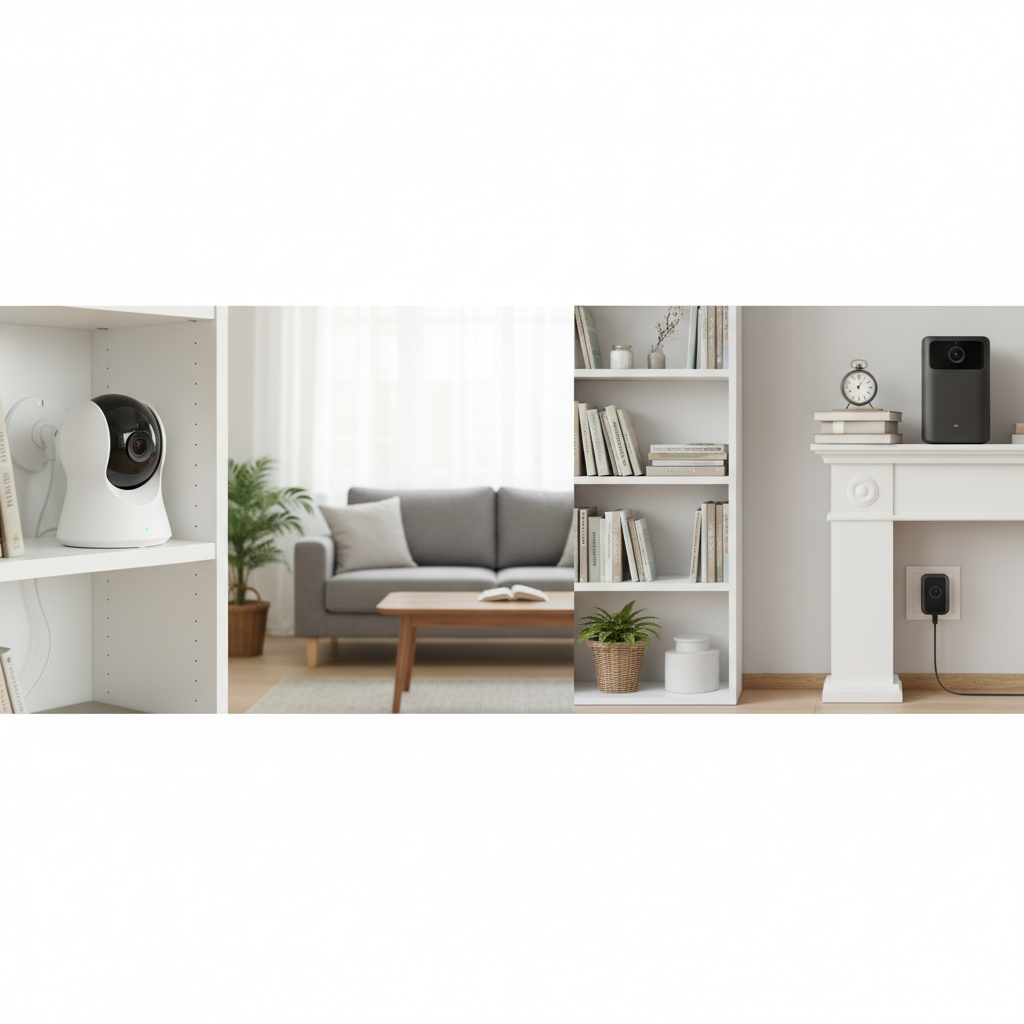
For a camera that is visible but incredibly small and unobtrusive, the MiniGuard Pro is an excellent choice. This cube-sized camera offers 1080p HD video, magnetic mounting, and basic night vision. While not hidden, its diminutive size allows it to blend into bookshelves or corners without drawing much attention, making it a good compromise between full visibility and discretion. It’s great for smaller spaces or as a secondary camera.
Indoor Security Camera Buying Guide
Navigating the multitude of options can be daunting. Here’s a guide to help you select the best indoor monitoring solution for your home.
Determine Your Usage Needs
Before anything else, clearly define what you want the camera to achieve.
- Deterrence: Do you want potential intruders to know they’re being watched? (Visible camera)
- Discreet Monitoring: Are you trying to catch someone in the act without their knowledge? (Hidden camera)
- General Monitoring: Do you want to check on pets, kids, or elderly family members? (Either, depending on discretion needs)
- Specific Areas: Which rooms or angles need coverage?
Set Your Budget
Prices vary widely based on features, resolution, and brand. Determine how much you’re willing to spend, keeping in mind that cloud storage often incurs recurring costs. Hidden cameras can sometimes be more expensive for equivalent video quality due to their specialized concealment design.
Research Reputable Brands
Stick to well-known brands that have a track record of reliability, good customer support, and regular software updates. For hidden cameras, specialized spy equipment retailers often offer more robust and discreet options.
Read Specifications Carefully
Don’t just look at the price. Pay close attention to:
- Resolution: 1080p is a minimum; 2K or 4K is better.
- Night Vision Range: Ensure it covers the room effectively.
- Field of View: A wider angle is usually better.
- Storage Options: SD card maximum capacity, cloud subscription details.
- Power Source: Battery life for hidden cameras, wired options for visible.
- Audio Features: Two-way audio, or just recording, and be aware of legalities for audio.
Consult User Reviews and Expert Opinions
Real-world experiences can highlight potential issues or unexpected benefits. Look for reviews that discuss video quality in various lighting conditions, app reliability, and customer service responsiveness. Sites like ReviewByMo.com offer extensive, practical evaluations.
Understand Warranty and Support
A good warranty and accessible customer support are invaluable if you encounter issues. Check the return policy and the availability of technical assistance.
Conclusion
Choosing between an indoor security camera and a hidden camera is a critical decision that balances deterrence, discretion, and legal compliance. Visible indoor security cameras excel as overt deterrents, offering robust features and peace of mind through their transparent presence. Hidden cameras, conversely, are unmatched for discreet surveillance, capturing authentic behavior without alerting the subject, crucial for specific evidence gathering.
Ultimately, the best solution often involves a thoughtful combination of both, strategically deployed to meet specific security needs while adhering strictly to all legal and ethical guidelines regarding privacy. By carefully considering your objectives, understanding the capabilities and limitations of each type, and prioritizing legal compliance, you can build a comprehensive indoor monitoring system that truly protects your home.
What security concerns are most pressing for your household, and how might a blend of visible and hidden technologies address them most effectively?
Frequently Asked Questions
Is it legal to use hidden cameras in your own home?
Generally, yes, it is legal to record video with a hidden camera in your own home in the U.S. without consent, especially in common areas where privacy isn’t reasonably expected. However, it is illegal to place hidden cameras in private areas like bathrooms or bedrooms, and recording audio often has stricter “one-party” or “all-party” consent laws depending on your state. Always check local regulations.
Can hidden cameras record audio?
Many hidden cameras are capable of recording audio. However, the legality of recording audio without consent is much stricter than video. Federal and state wiretapping laws, such as the Electronic Communications Privacy Act (ECPA), regulate the interception of electronic communications. Most states require at least one party’s consent, and some require all parties’ consent to record conversations.
Do hidden cameras require a Wi-Fi connection?
Not all hidden cameras require Wi-Fi. Many models offer local storage via a microSD card, recording footage directly onto the device for later retrieval. Wi-Fi enabled hidden cameras allow for remote viewing, motion alerts, and control via a smartphone app, providing real-time access from anywhere.
What is the battery life of a typical hidden camera?
The battery life of hidden cameras varies significantly depending on the model, resolution settings, and whether recording is continuous or motion-activated. Typical battery life for battery-powered hidden cameras ranges from 8 to 24 hours. Some are AC-powered (like USB charger cameras) or have larger external battery packs for extended operation.
Are hidden cameras effective as a deterrent?
No, hidden cameras are generally not effective as a deterrent because their presence is unknown. Their primary purpose is to capture evidence discreetly, not to prevent a crime through visible intimidation. Visible security cameras are much more effective for deterrence.