Ensuring the safety of our homes and loved ones is a top priority, leading many homeowners to explore various security solutions. Among the most popular options are indoor security cameras and home alarm systems, each promising peace of mind. However, understanding their distinct functions and capabilities is crucial when deciding which best suits your needs, or if a combination of both provides the ultimate defense. This article delves into the core differences, advantages, and limitations of each system, revealing how they can work together to create a truly secure environment.
Understanding Indoor Security Cameras
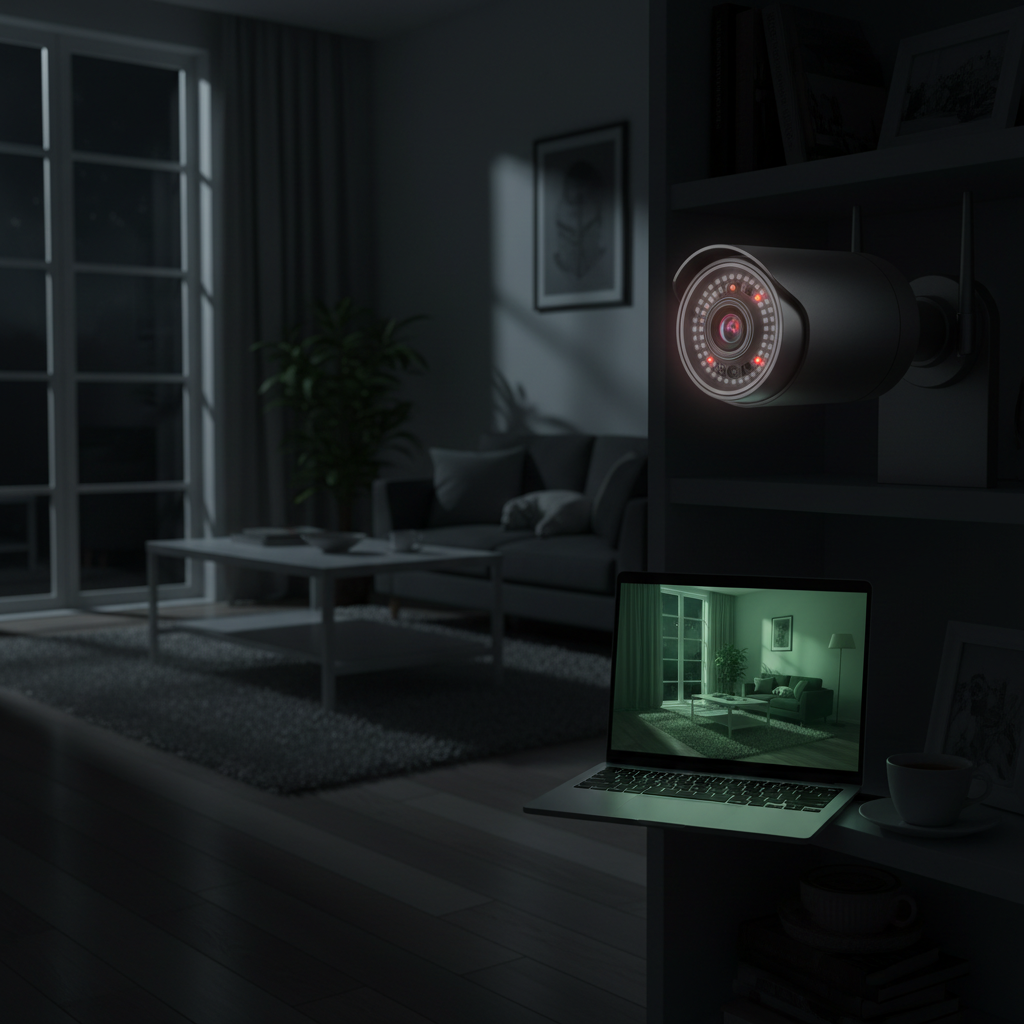
Indoor security cameras are surveillance devices designed to record video footage within the confines of your home. They serve as your “eyes” when you’re away, providing visual monitoring of interior spaces. These cameras can range from simple, stationary models to advanced Pan-Tilt-Zoom (PTZ) units with motion tracking capabilities. Their primary function is to observe, record, and allow you to view activities in real-time or review past events.
Indoor security cameras are important for several reasons, acting as both a deterrent and a source of crucial information. The mere presence of a visible camera can make potential intruders think twice about targeting your home. Beyond deterrence, they provide invaluable visual evidence in the unfortunate event of a break-in, aiding law enforcement in identifying suspects and potentially recovering stolen items.
Key applications of indoor security cameras extend beyond just crime prevention. Many homeowners use them to monitor children and pets, ensuring their safety and well-being while away. They are also useful for supervising service providers, such as housekeepers or babysitters, to ensure expected standards of behavior and service. With features like two-way audio, you can even communicate with those in your home remotely.
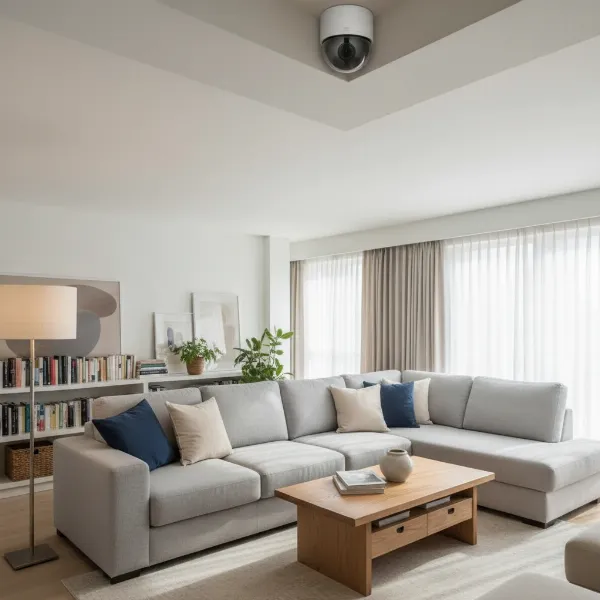 Modern indoor security camera actively monitoring a living room scene with natural light
The Role of Home Alarm Systems
Home alarm systems are designed primarily for intrusion detection and immediate alerting. Unlike cameras that focus on recording, alarm systems utilize various sensors to detect unauthorized entry or suspicious activity and then trigger an alert. This alert typically comes in the form of a loud siren, accompanied by notifications sent to the homeowner, and often, a professional monitoring center.
Alarm systems are crucial because they provide an immediate, proactive response to a security breach. When a sensor is triggered, the loud siren serves as a powerful deterrent, often scaring off intruders before they can cause significant damage or theft. Furthermore, professional monitoring services ensure that emergency services (police, fire, or medical) are dispatched swiftly, even when you are not home or unable to respond. Statistics indicate that homes without security systems are significantly more likely to be burglarized, underscoring their effectiveness as a deterrent.
Common components of alarm systems include door and window sensors, motion detectors, control panels, and sirens. Advanced systems may also integrate smoke detectors, carbon monoxide sensors, and panic buttons, offering comprehensive protection against various threats. These systems are typically set up to create a protective perimeter around your home, triggering alerts the moment this perimeter is breached.
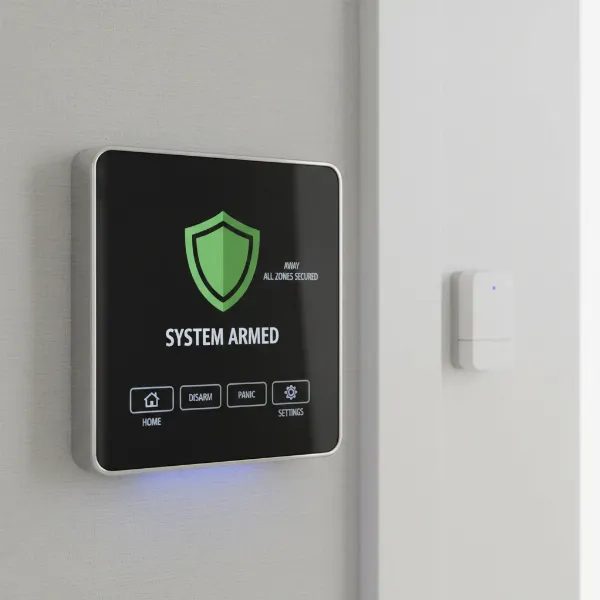 Close-up of a home alarm system control panel and a door sensor for security
Indoor Security Camera: Advantages and Limitations
Indoor security cameras offer distinct benefits for homeowners, but they also come with inherent limitations that are important to acknowledge. Understanding these aspects helps in making an informed decision about their role in your overall home security strategy.
Advantages of Indoor Security Cameras
|
Our Picks for the Best Indoor security camera in 2026
As an Amazon Associate I earn from qualifying purchases.
|
||
| Num | Product | Action |
|---|---|---|
| 1 | Blink Mini - Compact indoor plug-in smart security camera, 1080p HD video, night vision, motion detection, two-way audio, easy set up, Works with Alexa – 1 camera (White) |

|
| 2 | Blink Mini 2K+ (newest model) – Plug-in Home & Pet Indoor Security Camera with 2K video resolution, night vision, enhanced audio, motion detection – 2 cameras (Black) |
|
| 3 | Cinnado Security Camera Indoor-2K 360° WiFi Cameras for Home Security,Pet/Dog/Baby Camera with Phone app, 2-Way Audio, Night Vision, 24/7 SD Card Storage, Works with Alexa & Google Home (2.4Ghz)-D1 |
|
| 4 | Ring Indoor Cam, Home or business security in 1080p HD video, White |
|
| 5 | GNCC 2K Security Cameras 4pcs, Home Security Camera Indoor with 360° Motion Detection for Pets/Baby/Dog, Two-Way Audio, Night Vision, 24/7 SD Card Storage, Cloud Storage, Compatible with Alexa |
|
| 6 | Tapo 1080P Indoor Wired Security Camera - Works as a Baby & Pet Monitor, Motion Detection, 2-Way Audio, Siren, Night Vision, Subscription-Free Local or Optional Cloud, Works with Alexa, C100(4-Pack) |
|
| 7 | AOQEE 2K Cameras for Home Security-Outdoor/Indoor Camera for Dog/Cat/Pet/Nanny/Baby/Elderly, Color Night Vision, White Light, Siren, 24/7 SD Recordings, Works with Alexa, Plug in (C1-White-2pack-2.4G) |
|
| 8 | TP-Link Tapo 1080P Indoor Security Camera for Baby Monitor, Dog Camera w/Motion Detection, 2-Way Audio Siren, Night Vision, Cloud & SD Card Storage, Works w/Alexa & Google Home (Tapo C100) |
|
| 9 | Tapo 2K Indoor Pan/Tilt Wired Security Camera - Works as a Baby Monitor & Pet Camera, Motion Detection, 2-Way Audio, Siren, Night Vision, No-Subscription Local Storage or Optional Cloud, C211 (2-Pack) |
|
| 10 | Ring Indoor Cam Plus (newest model), Home or business security, Retinal 2K for crisp, true-to-life video quality, 4x Enhanced Zoom, Low-Light Sight, White |
|
The primary advantage of indoor security cameras is their ability to provide visual evidence during a security incident. This recorded footage can be invaluable for police investigations and insurance claims. Cameras also offer remote viewing capabilities, allowing you to check in on your home, loved ones, or pets from anywhere via a smartphone app. This real-time monitoring brings a significant sense of peace of mind. As a visual deterrent, a visible camera can discourage potential burglars, with studies showing that many criminals avoid homes with such installations. Beyond security, they are excellent for general monitoring, whether it’s keeping an eye on children, elderly family members, or service personnel.
Limitations of Indoor Security Cameras
Despite their benefits, indoor security cameras have several limitations. Crucially, they typically offer no immediate physical intervention or direct alert to authorities unless integrated with a professional monitoring service. They merely record events as they happen. Privacy concerns are also significant, as continuous video recording can feel intrusive to family members or guests, especially in private areas. Cameras can be vulnerable to hacking if not properly secured with strong passwords and updated software, posing cybersecurity risks. False alerts triggered by pets, moving curtains, or changing light can lead to notification fatigue. Furthermore, high-quality camera systems can be expensive to purchase and install, and they rely on constant power, requiring a battery backup to function during outages. Relying solely on cameras can also create a false sense of security, as they don’t prevent entry.
 Person checking live feed from an indoor security camera on their smartphone app
Home Alarm Systems: Advantages and Limitations
Home alarm systems play a different yet equally vital role in home security. They excel in detection and immediate response, but also have their own set of drawbacks.
Advantages of Home Alarm Systems
One of the most significant advantages of home alarm systems is their provision of immediate alerts. When a sensor detects an intrusion, an audible siren sounds, and notifications are sent instantly to homeowners and, often, a professional monitoring center. This loud noise acts as a strong deterrent, frequently scaring off intruders before they can complete a burglary. Homes without alarm systems are reportedly three times more likely to be targeted by burglars. Professional monitoring is a key benefit, ensuring that trained specialists respond to alerts by dispatching emergency services, even when you’re away. Many modern alarm systems also offer broader threat detection, including smoke, fire, and carbon monoxide sensors, providing comprehensive safety. Additionally, installing an alarm system can lead to insurance benefits, potentially lowering homeowner’s insurance premiums.
Limitations of Home Alarm Systems
While effective, home alarm systems have limitations. They typically provide no visual evidence of an intruder or the crime being committed, making it harder to identify perpetrators after the fact. False alarms are a common issue, often triggered by pets or user error, which can be annoying and, if frequent, may lead to fines or reduced police response. The systems often come with higher upfront and/or monthly costs for equipment, professional installation, and monitoring subscriptions. Alarms also require arming to be effective; if you forget to arm the system, it provides no protection. Sophisticated criminals might be able to bypass some systems using signal jamming technology or by disarming them. Finally, basic alarm systems typically don’t physically prevent entry, only alerting you once an entry attempt has been made.
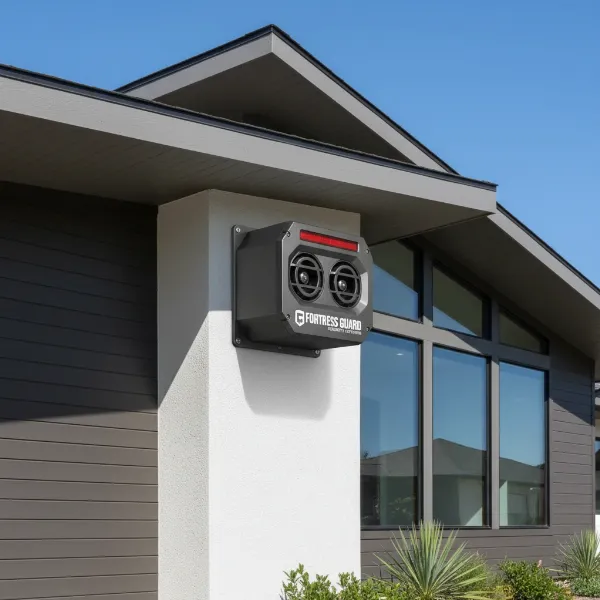 Outdoor home alarm siren mounted on a house as a visual and audible deterrent
Indoor Security Camera vs. Alarm Systems: A Direct Comparison
To truly understand which system, or combination, is best for your home, it’s helpful to see their core functionalities side-by-side.
| Feature | Indoor Security Camera | Home Alarm System |
|---|---|---|
| Primary Function | Visual Surveillance, Recording | Intrusion Detection, Alerting |
| Immediate Intervention | No (records events) | Yes (siren, professional dispatch) |
| Evidence Collection | High (video footage) | Low (no video) |
| Deterrence | Visual (visible cameras) | Audible (siren), Warning Signs |
| Professional Monitoring | Optional (cloud services) | Common, often required for full benefits |
| Cost | Varies, can be DIY-friendly | Often higher upfront/monthly fees |
| Privacy Concerns | Higher (continuous video recording) | Lower (sensor-based detection) |
| Vulnerabilities | Hacking, physical damage, blind spots | False alarms, signal jamming, power outages |
| Additional Features | Two-way audio, PTZ, night vision | Fire/CO detection, panic buttons, home automation integration |
The Truth: Combining for Superior Home Security
The definitive truth in home security is that neither an indoor security camera nor an alarm system, on its own, offers complete protection. Each has unique strengths that compensate for the other’s weaknesses. The smartest home security strategy involves integrating both for a layered, comprehensive defense.
When combined, cameras provide the visual confirmation that alarms lack. If an alarm system triggers an alert, you can immediately check your camera feed to verify the threat, reducing false alarm responses and providing crucial context. Conversely, an alarm system provides the immediate response and deterrence that cameras alone cannot. An intruder might smash a camera, but an alarm system with multiple sensors will still trigger, alerting you and potentially monitoring services.
This integration creates a robust ecosystem where cameras act as intelligent witnesses and alarms serve as immediate responders. This synergy results in stronger deterrence, faster response times, and ultimately, greater peace of mind for homeowners.
 Visual representation of an integrated home security system with camera and alarm icons
Choosing the Right Security Solution for Your Home
Selecting the ideal security setup requires thoughtful consideration of your specific circumstances and priorities. Here’s how to approach the decision-making process:
Assess Your Specific Needs
Start by identifying your primary security concerns. Are you mainly worried about break-ins, or do you also need to monitor pets or elderly family members? Do you want to deter criminals, or gather evidence after an event? Your lifestyle, whether you travel frequently or have a busy household, will also influence the best solution.
Consider Your Budget
Security solutions come with varying costs. Determine whether you prefer a lower upfront investment with potential monthly fees for monitoring, or a higher initial cost for a self-monitored, camera-centric system. Remember to factor in potential long-term costs like cloud storage subscriptions or professional maintenance.
Evaluate Integration Options
If you have other smart home devices, consider systems that can seamlessly integrate with your existing ecosystem. A unified system often offers greater convenience and enhanced functionality through a single app. Professional security companies often provide integrated solutions that combine cameras, alarms, and smart home features.
Research Reputable Brands and Reviews
Always research reputable security brands and read user reviews. Look for companies known for reliable equipment, strong customer support, and robust privacy policies, especially concerning data handling for camera footage. Understanding the experiences of other users can provide valuable insights into a system’s real-world performance.
 A person thoughtfully considering different home security system choices on a tablet
Expert Insights on Integrated Security
“Modern home security isn’t about choosing one tool over another; it’s about building a multi-layered defense. Integrating indoor security cameras with a robust alarm system provides unparalleled coverage, blending visual verification with immediate, actionable alerts. This combined approach is truly the gold standard for protecting what matters most.”
Conclusion
The debate between indoor security cameras and alarm systems isn’t about which is inherently “better,” but rather how each contributes to a complete home security strategy. While indoor security cameras excel at providing visual evidence and remote monitoring, they lack immediate intervention. Conversely, alarm systems offer powerful deterrence and rapid response, but without visual context. The most effective approach for securing your home is often a comprehensive system that intelligently combines the strengths of both. By integrating these technologies, you create a powerful, layered defense that watches, detects, and responds, offering a truly robust shield for your peace of mind. What steps will you take to layer your home’s defenses and enhance its security today?
Câu Hỏi Thường Gặp
Are indoor security cameras enough for home security?
While indoor security cameras are valuable for monitoring and collecting evidence, they are generally not enough on their own. They primarily record events and do not actively deter or prevent intrusions as effectively as an alarm system can, nor do they typically alert authorities directly without integration.
Do alarm systems really deter burglars?
Yes, alarm systems are highly effective at deterring burglars. The loud sirens and visible warning signs often make potential intruders think twice. Studies show that homes with security systems are significantly less likely to be targeted, indicating a strong deterrent effect.
What is the main difference between a security camera and an alarm system?
The main difference lies in their primary function: a security camera focuses on visual surveillance and recording footage, acting as an “eye.” An alarm system, on the other hand, prioritizes detecting unauthorized entry or activity through sensors and triggering immediate alerts and responses.
Can I have both an indoor security camera and an alarm system?
Absolutely. Combining an indoor security camera system with a home alarm system is often recommended as the most comprehensive approach. This integration allows you to leverage the strengths of both—visual verification from cameras and immediate alerts and deterrence from alarms—for a layered defense.
Are there privacy concerns with indoor security cameras?
Yes, privacy is a significant concern with indoor security cameras. Continuous recording can feel intrusive to family members or guests, especially in private areas like bedrooms. Careful placement, transparent communication with household members, and robust cybersecurity practices are essential to mitigate these concerns.