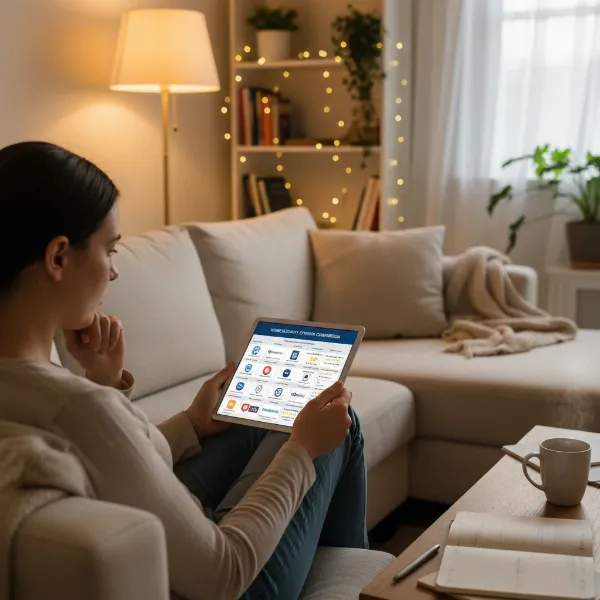
In our fast-paced world, ensuring the safety of our homes and loved ones has become a paramount concern. An indoor security camera offers a crucial layer of peace of mind, acting as your vigilant eyes when you can’t be there. Whether you’re at work, on vacation, or simply in another room, these smart devices allow you to monitor your living spaces, check on pets, or keep an eye on children and elderly family members with unprecedented ease. This comprehensive guide, informed by over a decade of hands-on experience, dives deep into the world of indoor security cameras, exploring their types, essential features, and top models to help you make the smartest choice for your home.
Overview of Indoor Security Cameras
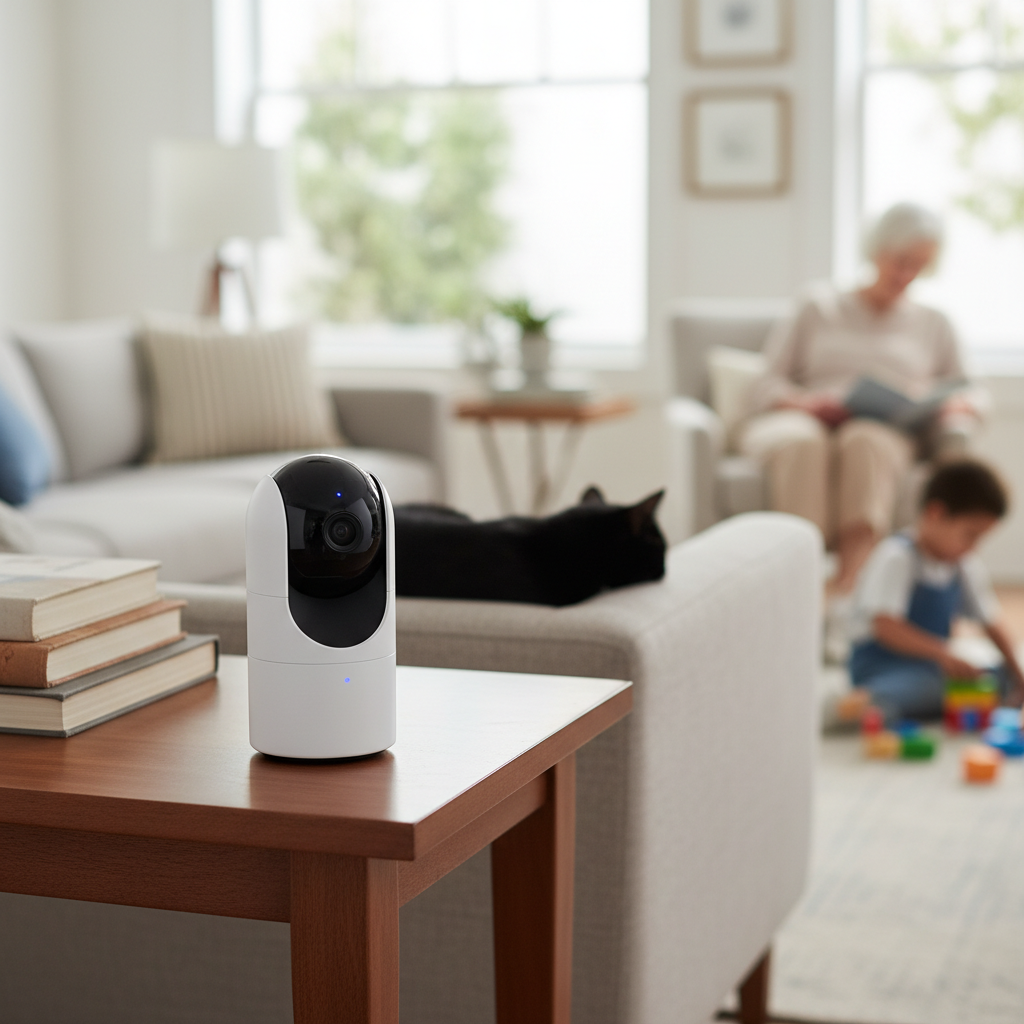
An indoor security camera is a connected device designed to monitor the interior of your home, providing real-time video surveillance and often additional functionalities like audio communication and motion detection. These cameras are not just about deterring intruders; they are integral to a modern smart home ecosystem, offering versatile solutions for a multitude of everyday needs.
The importance of indoor security cameras in safeguarding a home cannot be overstated. They provide continuous monitoring, recording evidence in case of an incident, and allowing for immediate alerts to your smartphone when unusual activity is detected. This proactive approach to security empowers homeowners to respond quickly, whether it’s checking on a package delivery or addressing a potential security breach.
Common applications for indoor security cameras extend beyond basic surveillance. Many families use them to monitor entry points like front doors or hallways, gaining early visual confirmation of movement. Pet owners find them invaluable for checking on their furry friends, understanding their behavior, and even interacting with them remotely. Caregivers utilize these cameras to keep an eye on young children or elderly relatives, ensuring their safety and well-being with real-time video access and two-way talk features. Ultimately, they capture unexpected events, providing crucial footage for investigations or insurance claims after a break-in or incident.
Types of Indoor Security Cameras
The market for indoor security cameras offers a diverse range of options, each with distinct advantages and applications. Understanding these types is the first step in finding the perfect fit for your home’s unique requirements.
[image-1|security-camera-types-comparison|A side-by-side comparison of different indoor security camera types, illustrating their shapes and typical uses.|
An infographic illustrating three distinct indoor security camera types: a sleek, modern IP camera on a stand; a traditional, dome-shaped analog camera mounted on a ceiling; and a robotic-looking PTZ camera with a wide lens. Each camera is clearly labeled with its type, shown in a clean, minimalist smart home setting with soft, even lighting and a clear, editorial style.]
IP Camera (Network Camera)
|
Our Picks for the Best Indoor security camera in 2026
As an Amazon Associate I earn from qualifying purchases.
|
||
| Num | Product | Action |
|---|---|---|
| 1 | Blink Mini - Compact indoor plug-in smart security camera, 1080p HD video, night vision, motion detection, two-way audio, easy set up, Works with Alexa – 1 camera (White) |

|
| 2 | Cinnado Security Camera Indoor-2K 360° WiFi Cameras for Home Security,Pet/Dog/Baby Camera with Phone app, 2-Way Audio, Night Vision, 24/7 SD Card Storage, Works with Alexa & Google Home (2.4Ghz)-D1 |
|
| 3 | Tapo 2K Indoor Pan/Tilt Wired Security Camera - Works as a Baby Monitor & Pet Camera, Motion Detection, 2-Way Audio, Siren, Night Vision, No-Subscription Local Storage or Optional Cloud, C211 (2-Pack) |
|
| 4 | Tapo 1080P Indoor Wired Security Camera - Works as a Baby & Pet Monitor, Motion Detection, 2-Way Audio, Siren, Night Vision, Subscription-Free Local or Optional Cloud, Works with Alexa, C100(4-Pack) |
|
| 5 | Blink Mini 2K+ (newest model) – Plug-in Home & Pet Indoor Security Camera with 2K video resolution, night vision, enhanced audio, motion detection – 2 cameras (Black) |
|
| 6 | AOQEE 2K Cameras for Home Security-Outdoor/Indoor Camera for Dog/Cat/Pet/Nanny/Baby/Elderly, Color Night Vision, White Light, Siren, 24/7 SD Recordings, Works with Alexa, Plug in (C1-White-2pack-2.4G) |
|
| 7 | Ring Indoor Cam, Home or business security in 1080p HD video, White |
|
| 8 | GNCC 2K Security Cameras 4pcs, Home Security Camera Indoor with 360° Motion Detection for Pets/Baby/Dog, Two-Way Audio, Night Vision, 24/7 SD Card Storage, Cloud Storage, Compatible with Alexa |
|
| 9 | TP-Link Tapo 1080P Indoor Security Camera for Baby Monitor, Dog Camera w/Motion Detection, 2-Way Audio Siren, Night Vision, Cloud & SD Card Storage, Works w/Alexa & Google Home (Tapo C100) |
|
| 10 | Ring Indoor Cam Plus (newest model), Home or business security, Retinal 2K for crisp, true-to-life video quality, 4x Enhanced Zoom, Low-Light Sight, White |
|
IP cameras, also known as network cameras, transmit digital video streams over an internet protocol network, either via Wi-Fi or an Ethernet cable. This digital transmission allows for high-resolution video quality and advanced features. Most modern indoor security systems utilize IP technology, often incorporating Power over Ethernet (PoE) for simplified installation where a single Ethernet cable supplies both power and data. They excel in remote viewing capabilities, allowing users to access live feeds and recorded footage from anywhere via a smartphone app or web portal. This type offers superior image clarity and flexible integration with other smart home devices.
Analog Camera
Analog cameras, often referred to as Closed-Circuit Television (CCTV) cameras, are an older technology that transmits video signals over coaxial cables to a Digital Video Recorder (DVR). While they typically offer lower resolution compared to modern IP cameras, they can be a cost-effective solution, especially if a property already has existing coaxial wiring. A key advantage of some analog systems is their ability to function independently of an internet connection, storing footage locally on an SD card or hard drive. However, they generally lack features like live remote streaming, instant notification alerts, and advanced smart capabilities.
PTZ Camera (Pan-Tilt-Zoom)
PTZ cameras are highly versatile indoor security cameras that allow users to remotely control their lens movement, offering horizontal panning, vertical tilting, and optical or digital zooming capabilities. This flexibility makes them ideal for monitoring large rooms or areas where a wide, dynamic field of view is required. With a PTZ camera, you can actively track movement, zoom in on specific details, or adjust the viewing angle as needed, all from your smartphone. However, their mechanical components can sometimes introduce a slight delay in response and may have specific privacy considerations due to their ability to cover broad areas.
WiFi Camera (Wireless)
WiFi cameras are a popular choice for their ease of installation and flexible placement options, connecting wirelessly to your home’s internet network. Many are designed to be “wire-free,” operating on rechargeable batteries, offering complete freedom from power outlets and cabling. Others are “wireless” in terms of data transmission but still require a power cord. These cameras seamlessly integrate with smart home ecosystems, allowing for real-time streaming, motion alerts, and two-way audio through a companion app. While highly convenient, their performance can be dependent on the strength and stability of your home’s Wi-Fi signal.
Important Features of Indoor Security Cameras
When selecting an indoor security camera, a myriad of features contribute to its effectiveness and user experience. Understanding these key attributes will help you prioritize what matters most for your specific needs.
Resolution and Image Quality
The clarity and detail of your camera’s footage are paramount, especially when identifying faces or objects. Video resolution is measured in pixels, with common options ranging from 1080p Full HD to higher definitions like 2K and even 4K. While 1080p is sufficient for most general monitoring, 2K and 4K cameras provide incredibly sharper images, allowing for clearer identification and the ability to zoom in on details without significant pixelation. When reviewing footage, high-quality video makes all the difference, especially in critical situations.
Field of View and Pan-Tilt-Zoom Capabilities
The field of view (FOV) dictates how much area the camera can capture. Wide-angle lenses, typically between 120 and 180 degrees, are excellent for covering larger rooms or open-plan living spaces without needing multiple devices. For even greater coverage and flexibility, cameras with Pan-Tilt-Zoom (PTZ) capabilities allow you to remotely adjust the camera’s orientation and zoom level. This feature is particularly useful for actively tracking movement or inspecting specific areas within a large space.
Night Vision
Security needs don’t cease after dark. Night vision is an essential feature for 24/7 home protection, ensuring clear visibility even in low-light or complete darkness. Most indoor cameras utilize infrared (IR) LED technology to produce clear black-and-white footage in the dark. Advanced models are increasingly offering color night vision, which can provide more detailed and useful information by capturing ambient light to render images in color, even in dim conditions.
[image-2|indoor-camera-night-vision|A clear, black-and-white image from an indoor security camera at night, showing a living room with a couch and a window.|
A nighttime view from an indoor security camera, showcasing crisp black-and-white infrared night vision. The scene depicts a dimly lit living room with a sofa, a coffee table, and a bookshelf. The perspective is eye-level, highlighting the clear details captured even in complete darkness, with an emphasis on realistic home security imagery.]
Motion Detection and Smart Alerts
Modern indoor security cameras are equipped with sophisticated motion detection capabilities, allowing them to record only when activity is detected. This feature conserves storage space and reduces the time spent sifting through hours of uneventful footage. Many advanced cameras take this a step further with AI-powered smart alerts, offering adjustable sensitivity and specialized detection for humans, pets, or even specific sounds like crying. This intelligence significantly reduces false alarms triggered by minor movements like curtains fluttering or a pet walking by.
Data Storage (SD Card vs. Cloud)
How your camera stores footage is a critical consideration. Two primary options exist:
- Local Storage: Typically involves a MicroSD card inserted directly into the camera. This option offers control over your data without ongoing subscription costs and is excellent for privacy. However, storage capacity can be limited, and footage could be compromised if the camera is stolen or damaged.
- Cloud Storage: Involves uploading recorded footage to secure off-site servers, usually managed by the camera manufacturer. This often requires a monthly subscription but provides accessible, secure storage that isn’t vulnerable to local device issues. Many modern systems offer hybrid solutions, combining a small amount of local storage with cloud backup for enhanced reliability.
Two-Way Audio
Two-way audio transforms your security camera into a communication device. Equipped with a built-in microphone and speaker, this feature allows you to listen to what’s happening in your home and speak through the camera from your smartphone. It’s incredibly useful for checking in with family members, comforting pets, or even deterring an intruder with a verbal warning. Clear audio quality on both ends is crucial for effective communication.
Connectivity and Remote Control
The ability to connect and control your camera remotely is a cornerstone of modern indoor security. Most cameras offer real-time streaming capabilities, allowing you to view live feeds from anywhere via a dedicated mobile app. This app also serves as the control hub for reviewing past recordings, customizing motion zones, adjusting settings, and receiving timely alerts. Seamless integration with your home Wi-Fi network and an intuitive, user-friendly app are essential for a smooth and reliable experience.
Comparison of Popular Indoor Security Camera Models
To provide a clearer perspective, here’s a comparison of some popular indoor security camera models, highlighting their key specifications and features.
| Feature | Ring Indoor Cam (2nd Gen) | Arlo Essential Indoor Camera | EZVIZ C6 2K+ | Google Nest Cam Indoor (Wired, 3rd Gen) |
|---|---|---|---|---|
| Resolution | 1080p HD | 1080p HD | 2K (1440p) | 1080p HD |
| Field of View | 140° diagonal | 130° diagonal | 360° Pan & Tilt (horizontal) | 130° diagonal |
| Night Vision | Color Night Vision | Black & White IR | Black & White IR (up to 33 ft) | Color Night Vision |
| Storage | Cloud (subscription) | Cloud (subscription) | Local (up to 256GB microSD) + Cloud | Cloud (subscription) + 3 hrs history |
| Two-Way Audio | Yes, with noise cancel. | Yes | Yes | Yes |
| Privacy Features | Manual Privacy Cover | Automated Privacy Shutter | Sleep Mode, Physical Cover | Activity Zones, Status Light |
| AI Features | Person Detection (subscr.) | Person/Pet Detection (subscr.) | Person Detection, Crying Detect. | Person, Pet, Vehicle Detect. (subscr.) |
| Smart Home Comp. | Alexa, Google Assistant | Alexa, Google Assistant | Alexa, Google Assistant | Google Home, Alexa |
Guide to Purchasing an Indoor Security Camera
Choosing the right indoor security camera can seem daunting with so many options available. By following a structured approach, you can narrow down your choices and find a camera that perfectly matches your home and lifestyle.
[image-3|buying-indoor-security-camera|A person comparing different indoor security camera boxes on a retail shelf, highlighting features and prices.|
A focused shot of a person’s hands browsing various indoor security camera boxes on a store shelf. The boxes display key features and price tags, with the person appearing to be comparing options carefully. The background is a slightly blurred electronics store aisle, under bright retail lighting, in a realistic and practical buying guide style.]
Determine Your Usage Needs
Start by defining why you need an indoor camera. Are you monitoring a baby, checking on an elderly relative, keeping an eye on mischievous pets, or simply adding an extra layer of security against intruders? Your primary use case will guide your feature requirements. For example, a baby monitor needs excellent two-way audio and crying detection, while general security might prioritize wide-angle viewing and smart motion alerts.
Set Your Budget
Indoor security cameras come at various price points, from entry-level models under $50 to premium systems exceeding $200. Factor in not just the initial purchase price but also potential ongoing costs like cloud storage subscriptions, which can add up over time. Decide if you prefer a one-time investment in local storage or are comfortable with recurring fees for cloud services and advanced AI features.
Research Reputable Brands
Stick to well-established brands known for their reliability, security, and customer support. Companies like Ring, Arlo, EZVIZ, Google Nest, Eufy, and TP-Link are popular choices, often providing robust ecosystems and regular software updates. Reading reviews from other users can offer valuable insights into real-world performance and common issues.
Read Technical Specifications
Don’t overlook the technical details. Pay close attention to video resolution (1080p, 2K, 4K), night vision range, field of view (degrees), storage options (MicroSD card slot, cloud plans), and battery life for wire-free models. These specifications directly impact the camera’s performance and suitability for your intended use.
Consult User Reviews and Expert Opinions
Before making a final decision, consult a variety of user reviews on retail sites and expert assessments from reputable tech review websites. These sources often highlight practical pros and cons, ease of setup, app functionality, and actual performance in diverse home environments. Look for consistent feedback regarding reliability, false alarms, and customer service.
Understand Warranty and Support
A good warranty and accessible customer support are crucial. Ensure the camera you choose comes with a decent warranty period (typically 1-2 years) and that the manufacturer offers reliable technical assistance. Knowing you have support for setup issues or troubleshooting can save a lot of frustration down the line.
Top Picks: Reviewed Indoor Security Cameras
After extensive testing and evaluation, here are our top recommendations for indoor security cameras, catering to different needs and priorities.
Ring Indoor Cam (2nd Gen): Best Overall Value
The Ring Indoor Cam (2nd Gen) stands out for its impressive blend of features, reliability, and affordability. It delivers crisp 1080p HD video, even in low light with its color night vision, and offers clear two-way audio with noise cancellation. A standout feature is the integrated manual privacy cover, allowing users to physically block the lens and mute audio for peace of mind when home. Its seamless integration with the Ring ecosystem and Alexa makes it a versatile choice for many households, though a subscription is needed to unlock full features and cloud storage. It’s an excellent option for those seeking a dependable camera without breaking the bank.
Arlo Essential Indoor Camera: Best for Privacy-Conscious Users
For individuals who prioritize privacy above all else, the Arlo Essential Indoor Camera is an exceptional choice. Its most compelling feature is the automated privacy shutter, which physically covers the lens and disables the microphone when the camera is disarmed, ensuring no accidental recordings or surveillance. Beyond privacy, it delivers clear full HD footage day and night and integrates well with Alexa and Google Assistant. While it requires an Arlo Secure subscription for cloud video recording, the commitment to user privacy makes it a top contender for sensitive areas of the home.
EZVIZ C6 2K+: Best for Comprehensive Room Coverage
If monitoring a large room or needing a 360-degree view is your priority, the EZVIZ C6 2K+ is a fantastic option. This pan-and-tilt camera captures footage in stunning 2K resolution (1440p), providing significantly more detail than standard 1080p cameras. Its motorized pan and tilt functions allow for a comprehensive view of the entire space, controllable remotely via the app. What’s more, it often includes generous onboard storage (e.g., 32GB or 256GB MicroSD support), reducing reliance on cloud subscriptions. Advanced AI features like person detection and crying detection further enhance its utility, making it perfect for families or open-plan homes.
“Modern indoor cameras are not just about recording; they’re about providing intelligent awareness and seamless integration into your daily life, offering peace of mind through smart, responsive technology.” – Alex Chen, Smart Home Security Expert
Conclusion
Choosing the ideal indoor security camera involves carefully weighing your personal needs against the myriad of features available. From monitoring beloved pets to safeguarding against potential intrusions, these devices offer invaluable peace of mind through their advanced capabilities. By focusing on essential aspects like video quality, night vision, smart detection, and privacy features, you can confidently select a camera that provides reliable surveillance and seamless integration into your smart home. Ultimately, the best indoor security camera is one that fits your lifestyle, enhances your security, and empowers you to stay connected to your home, no matter where you are. What aspect of indoor security gives you the most confidence in your home’s safety?
Frequently Asked Questions
What is the most important feature for an indoor security camera?
The most important feature often depends on individual needs, but high video resolution (at least 1080p), reliable night vision, and effective motion detection with smart alerts are universally critical for clear monitoring and timely notifications. Two-way audio is also highly valued for interaction.
Can indoor security cameras work without Wi-Fi?
Yes, some indoor security cameras can work without Wi-Fi. Analog cameras typically store footage locally on an SD card or hard drive, viewable directly from the device or a connected monitor, but they lack remote access and smart features.
How can I ensure the privacy of my indoor security camera?
To ensure privacy, choose cameras with physical privacy shutters or “sleep modes” that disable recording when you’re home. Opt for models with strong data encryption, set secure passwords, and only place cameras in public areas of your home, avoiding private spaces like bedrooms or bathrooms.
Do indoor security cameras require a subscription?
Many indoor security cameras offer basic functionalities without a subscription, such as live viewing and local storage. However, advanced features like cloud storage, AI-powered person/pet detection, and extended video history often require a paid monthly or annual subscription.
What is the difference between wired and wireless indoor cameras?
Wired cameras provide a more stable and secure connection, typically using an Ethernet cable for power and data, but they require professional installation. Wireless cameras connect via Wi-Fi for data transmission and are easier to install, though some still need a power cord, while “wire-free” models run on batteries.