Ensuring the safety and security of your home is a top priority for many, and indoor security cameras play a pivotal role in achieving this peace of mind. As an Admin with ReviewByMo.com and over a decade of experience testing hundreds of security cameras, I understand the challenges in selecting the right device. The sheer volume of options can be overwhelming, especially when your primary concern is reliable record keeping. This guide will help you navigate the features, types, and storage solutions available, empowering you to make the most informed decision, just like a trusted friend advising you. We’ll delve into what makes a camera truly effective for monitoring and documenting every crucial moment, ensuring you never miss a beat inside your home.
Overview of Indoor Security Cameras
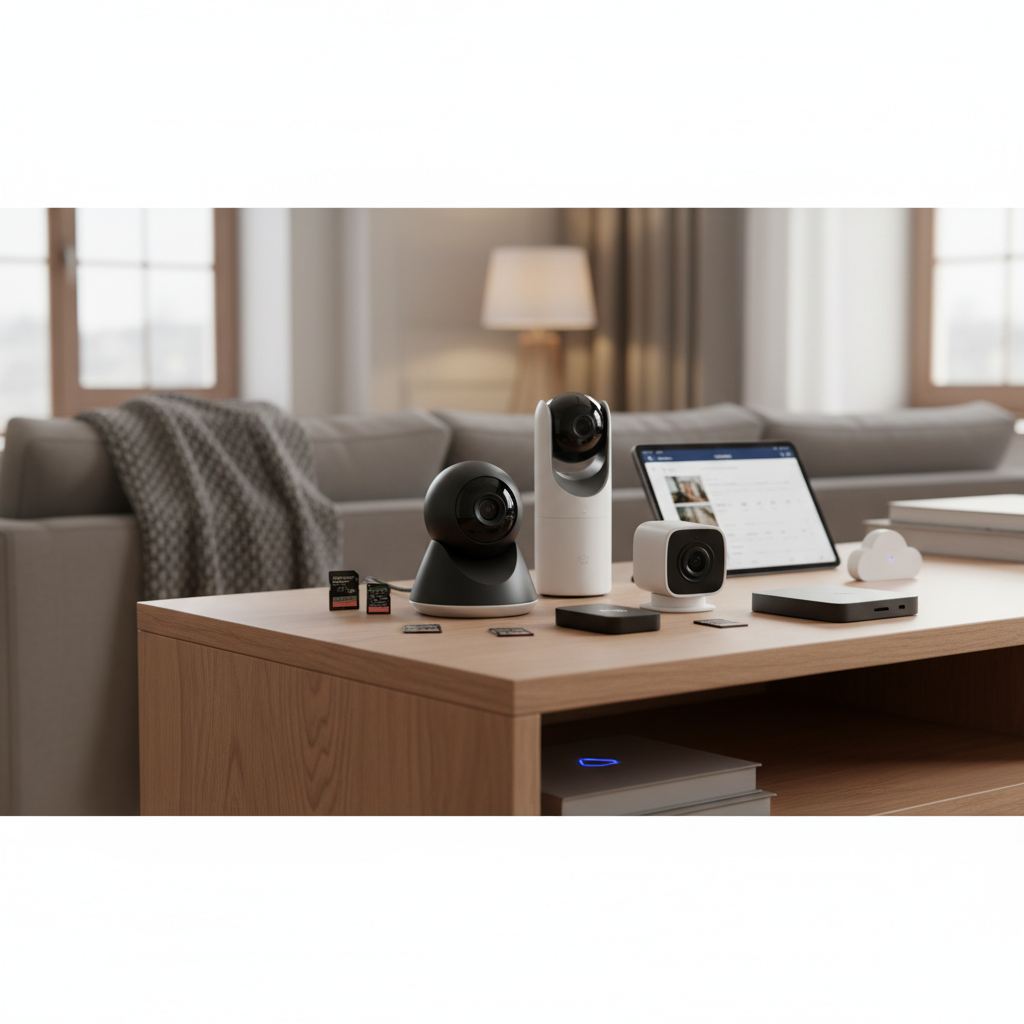
Indoor security cameras are specialized surveillance devices designed to monitor the interior spaces of your property. Far from being mere “eyes,” these smart tools have evolved into comprehensive security solutions that offer much more than just video footage. Their primary importance lies in providing continuous oversight, acting as a deterrent to potential intruders, and offering crucial evidence in the event of an incident. These cameras keep a vigilant watch over the most intimate parts of your house, safeguarding your family, pets, and valuable possessions.
The applications for indoor security cameras are vast and varied, catering to a wide range of household needs. Many homeowners use them as nanny cams to ensure the safety and well-being of their children and caregivers. Pet owners often deploy them as pet cams, allowing them to check in on their furry friends, monitor behavior, or even interact via two-way audio when away. They are also indispensable for monitoring entry points like front doors or hallways, providing early visual confirmation of movement. Beyond immediate security, these cameras are excellent for capturing unexpected events, with recorded footage serving as vital evidence for investigations or insurance claims after a break-in or incident. Their integration with smart home ecosystems further enhances their utility, offering real-time monitoring and intelligent alerts that keep you connected and in control, whether you’re across the street or across the country.
Types of Indoor Security Cameras and Their Recording Capabilities
Understanding the different types of indoor security cameras is crucial, as each offers unique strengths and recording functionalities.
IP Cameras
|
Our Picks for the Best Indoor security camera in 2026
As an Amazon Associate I earn from qualifying purchases.
|
||
| Num | Product | Action |
|---|---|---|
| 1 | TP-Link Tapo 1080P Indoor Security Camera for Baby Monitor, Dog Camera w/Motion Detection, 2-Way Audio Siren, Night Vision, Cloud & SD Card Storage, Works w/Alexa & Google Home (Tapo C100) |

|
| 2 | Ring Indoor Cam Plus (newest model), Home or business security, Retinal 2K for crisp, true-to-life video quality, 4x Enhanced Zoom, Low-Light Sight, White |
|
| 3 | Ring Indoor Cam, Home or business security in 1080p HD video, White |
|
| 4 | GNCC 2K Security Cameras 4pcs, Home Security Camera Indoor with 360° Motion Detection for Pets/Baby/Dog, Two-Way Audio, Night Vision, 24/7 SD Card Storage, Cloud Storage, Compatible with Alexa |
|
| 5 | Tapo 1080P Indoor Wired Security Camera - Works as a Baby & Pet Monitor, Motion Detection, 2-Way Audio, Siren, Night Vision, Subscription-Free Local or Optional Cloud, Works with Alexa, C100(4-Pack) |
|
| 6 | Cinnado Security Camera Indoor-2K 360° WiFi Cameras for Home Security,Pet/Dog/Baby Camera with Phone app, 2-Way Audio, Night Vision, 24/7 SD Card Storage, Works with Alexa & Google Home (2.4Ghz)-D1 |
|
| 7 | Blink Mini - Compact indoor plug-in smart security camera, 1080p HD video, night vision, motion detection, two-way audio, easy set up, Works with Alexa – 1 camera (White) |
|
| 8 | Tapo 2K Indoor Pan/Tilt Wired Security Camera - Works as a Baby Monitor & Pet Camera, Motion Detection, 2-Way Audio, Siren, Night Vision, No-Subscription Local Storage or Optional Cloud, C211 (2-Pack) |
|
| 9 | AOQEE 2K Cameras for Home Security-Outdoor/Indoor Camera for Dog/Cat/Pet/Nanny/Baby/Elderly, Color Night Vision, White Light, Siren, 24/7 SD Recordings, Works with Alexa, Plug in (C1-White-2pack-2.4G) |
|
| 10 | Blink Mini 2K+ (newest model) – Plug-in Home & Pet Indoor Security Camera with 2K video resolution, night vision, enhanced audio, motion detection – 2 cameras (Black) |
|
IP (Internet Protocol) cameras are modern digital cameras that transmit video data over a network, typically via Wi-Fi or Ethernet cables. They are essentially mini-computers, converting video into data packets. These cameras are renowned for their high-definition video quality, often starting at 1080p and extending up to 4K or even 12MP resolutions, providing crystal-clear images and superior digital zoom capabilities. IP cameras offer immense flexibility, allowing remote access to live feeds and recorded clips from anywhere with an internet connection through a smartphone app or web browser. Many advanced IP cameras boast AI-enhanced features, such as person, pet, and package detection, which reduce false alerts and provide more relevant notifications. For record keeping, IP cameras are highly versatile, supporting both cloud storage through subscription services and local storage options, often via Network Video Recorders (NVRs) or microSD cards, ensuring flexible data retention.
Analog Cameras
Analog cameras represent the more traditional side of surveillance technology. These cameras transmit video signals in a continuous stream through coaxial cables to a Digital Video Recorder (DVR). While often more cost-effective and straightforward for basic surveillance setups, analog cameras typically offer lower resolutions compared to their IP counterparts, usually maxing out at 720p or 1080p. Their recording capabilities are primarily limited to local storage on the connected DVR, which records video in a digital format to a hard disk drive. Although reliable, they lack the advanced features like high-resolution remote access, smart detection, and network integration found in modern IP and Wi-Fi alternatives. As a result, they are less common for new indoor security camera installations, particularly for users prioritizing advanced record-keeping flexibility and smart features.
PTZ (Pan-Tilt-Zoom) Cameras
PTZ cameras are a dynamic type of security camera equipped with motorized controls that allow them to pan (move horizontally), tilt (move vertically), and zoom in or out. This mechanical functionality provides extensive coverage, often achieving a full 360-degree view of a large space, effectively eliminating blind spots without the need for multiple fixed cameras. Users can remotely control PTZ cameras via a smartphone app or monitoring station, making them ideal for actively scanning large indoor areas or focusing on specific details as needed. Many PTZ models also incorporate auto-tracking features, allowing the camera to automatically follow moving subjects within its field of view. When it comes to record keeping, PTZ cameras can support continuous recording, typically storing footage either locally on a microSD card or NVR, or remotely via cloud subscription services, offering flexibility for comprehensive surveillance of expansive indoor environments.
Wi-Fi Cameras
Wi-Fi cameras are a popular choice for indoor security due to their ease of installation and flexible placement. These cameras connect to your home network wirelessly, eliminating the need for extensive wiring and allowing for quick setup and relocation. They are particularly favored by renters or those seeking temporary surveillance solutions. While often relying on Wi-Fi for connectivity, it’s important to note that many Wi-Fi cameras are still powered by a plug-in adapter, though battery-powered wireless models are also available. For record keeping, Wi-Fi cameras commonly utilize cloud storage subscriptions for remote access and off-site backup. However, many models also include a microSD card slot for local storage, enabling continuous recording or event-triggered recording without relying solely on an internet connection or incurring recurring fees, offering a hybrid approach to data management.
Essential Features of Indoor Security Cameras for Record Keeping
When selecting an indoor security camera, especially one for reliable record keeping, several features are paramount. These elements collectively determine the effectiveness, clarity, and accessibility of your recorded footage.
Resolution and Image Quality
The clarity of your recorded footage is fundamental for effective record keeping. Video resolution dictates how sharp and detailed the images will be, allowing you to identify faces, objects, and specific events with greater precision. While 1080p Full HD is a common standard offering sufficient clarity for most residential needs, higher-resolution cameras—such as 2K (1440p) or 4K UHD—provide significantly improved visibility. With higher resolution, you can zoom in further on recorded video without excessive pixelation, which is critical for extracting important details that might be overlooked in lower-quality footage. Investing in a camera with at least 1080p, and preferably