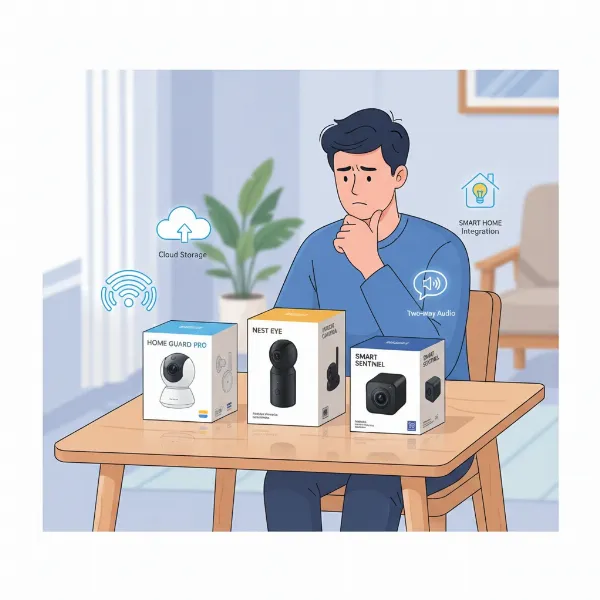
In today’s fast-paced world, an indoor security camera isn’t just a gadget; it’s a vital component of a secure and peaceful home. Imagine being away, yet able to instantly check on your furry friends, confirm your children arrived home safely, or simply ensure everything is in order. These compact devices offer real-time monitoring and intelligent alerts, empowering you to stay connected and in control of your living space from anywhere. Whether you’re a busy professional, a pet parent, or someone who frequently travels, understanding how to choose the right indoor camera can transform your home security and bring unparalleled peace of mind.
An Overview of Indoor Security Cameras
An indoor security camera is a surveillance device specifically designed to monitor the interior spaces of your home, capturing and transmitting live video footage. Unlike their outdoor counterparts, these cameras are typically more compact and aesthetically designed to blend seamlessly with home décor, prioritizing features relevant to indoor environments rather than weather resistance.
The importance of indoor security cameras extends beyond simply recording incidents. They provide an extra layer of security, acting as both a deterrent to potential intruders and a crucial tool for evidence collection in the event of a break-in. Furthermore, these cameras serve numerous practical daily applications. They allow homeowners to remotely monitor pets, check in on elderly relatives or children, and even communicate with family members or service providers through two-way audio. In essence, an indoor camera offers continuous oversight, ensuring the safety and well-being of your household.
Popular Types of Indoor Security Cameras
The market offers a diverse range of indoor security cameras, each with unique characteristics catering to different needs and preferences. Understanding these types is crucial for making an informed decision.
IP Cameras
IP (Internet Protocol) cameras are modern digital cameras that send and receive video footage over an IP network, typically your home’s Wi-Fi. Many contemporary indoor cameras fall under this category due to their advanced features and ease of connectivity.
- Pros: High resolution, advanced features like AI-powered detection, remote access via smartphone apps, and often seamless integration with smart home ecosystems. They are flexible in placement as long as they have Wi-Fi coverage.
- Cons: Reliance on a stable internet connection, potential for cybersecurity vulnerabilities if not properly secured, and sometimes higher upfront costs or subscription fees for cloud storage and advanced features.
- Applications: General home monitoring, smart home integration, and applications requiring intelligent alerts and remote control.
|
Our Picks for the Best Indoor security camera in 2026
As an Amazon Associate I earn from qualifying purchases.
|
||
| Num | Product | Action |
|---|---|---|
| 1 | TP-Link Tapo 1080P Indoor Security Camera for Baby Monitor, Dog Camera w/Motion Detection, 2-Way Audio Siren, Night Vision, Cloud & SD Card Storage, Works w/Alexa & Google Home (Tapo C100) |

|
| 2 | Tapo 1080P Indoor Wired Security Camera - Works as a Baby & Pet Monitor, Motion Detection, 2-Way Audio, Siren, Night Vision, Subscription-Free Local or Optional Cloud, Works with Alexa, C100(4-Pack) |
|
| 3 | Ring Indoor Cam Plus (newest model), Home or business security, Retinal 2K for crisp, true-to-life video quality, 4x Enhanced Zoom, Low-Light Sight, White |
|
| 4 | Ring Indoor Cam, Home or business security in 1080p HD video, White |
|
| 5 | GNCC 2K Security Cameras 4pcs, Home Security Camera Indoor with 360° Motion Detection for Pets/Baby/Dog, Two-Way Audio, Night Vision, 24/7 SD Card Storage, Cloud Storage, Compatible with Alexa |
|
| 6 | Tapo 2K Indoor Pan/Tilt Wired Security Camera - Works as a Baby Monitor & Pet Camera, Motion Detection, 2-Way Audio, Siren, Night Vision, No-Subscription Local Storage or Optional Cloud, C211 (2-Pack) |
|
| 7 | Blink Mini - Compact indoor plug-in smart security camera, 1080p HD video, night vision, motion detection, two-way audio, easy set up, Works with Alexa – 1 camera (White) |
|
| 8 | Cinnado Security Camera Indoor-2K 360° WiFi Cameras for Home Security,Pet/Dog/Baby Camera with Phone app, 2-Way Audio, Night Vision, 24/7 SD Card Storage, Works with Alexa & Google Home (2.4Ghz)-D1 |
|
| 9 | AOQEE 2K Cameras for Home Security-Outdoor/Indoor Camera for Dog/Cat/Pet/Nanny/Baby/Elderly, Color Night Vision, White Light, Siren, 24/7 SD Recordings, Works with Alexa, Plug in (C1-White-2pack-2.4G) |
|
| 10 | Blink Mini 2K+ (newest model) – Plug-in Home & Pet Indoor Security Camera with 2K video resolution, night vision, enhanced audio, motion detection – 2 cameras (Black) |
|
Analog Cameras
Analog cameras, often part of a CCTV (Closed-Circuit Television) system, transmit video over coaxial cables to a digital video recorder (DVR). While less common in standalone indoor home security, they are still found in some wired systems.
- Pros: Highly reliable wired connection, continuous recording to local storage (DVR), less susceptible to Wi-Fi interference or hacking compared to internet-connected cameras. Can function without an internet connection for local recording.
- Cons: Lower video resolution compared to IP cameras, more complex and permanent installation due to cabling requirements, and often lacks smart features like remote access or AI detection.
- Applications: Situations where a robust, continuous local recording is prioritized, and internet connectivity is unreliable or unavailable.
PTZ (Pan-Tilt-Zoom) Cameras
PTZ cameras offer mechanical control over their lens, allowing users to remotely pan (move horizontally), tilt (move vertically), and zoom in or out on specific areas.
- Pros: Provides a wider field of view and comprehensive coverage of a large room from a single vantage point, eliminates blind spots, and offers flexibility in monitoring specific areas on demand.
- Cons: Can be more expensive than fixed cameras, and continuous panning/tilting might consume more storage or battery life.
- Applications: Monitoring large living spaces, open-plan areas, or rooms where a single camera needs to cover multiple angles and focus on specific details.
WiFi Cameras
WiFi cameras are a subset of IP cameras that connect wirelessly to your home’s internet network. They are among the most popular choices for indoor home security due to their convenience.
- Pros: Easy DIY installation without extensive wiring, flexible placement options (within Wi-Fi range), and remote access and control via smartphone applications.
- Cons: Performance depends heavily on Wi-Fi signal strength and network bandwidth, potential for signal interference, and can be vulnerable to hacking if network security is weak. Some battery-powered models require regular recharging.
- Applications: General indoor surveillance, pet monitoring, baby monitoring, and integration into smart home systems where ease of installation and remote access are key.
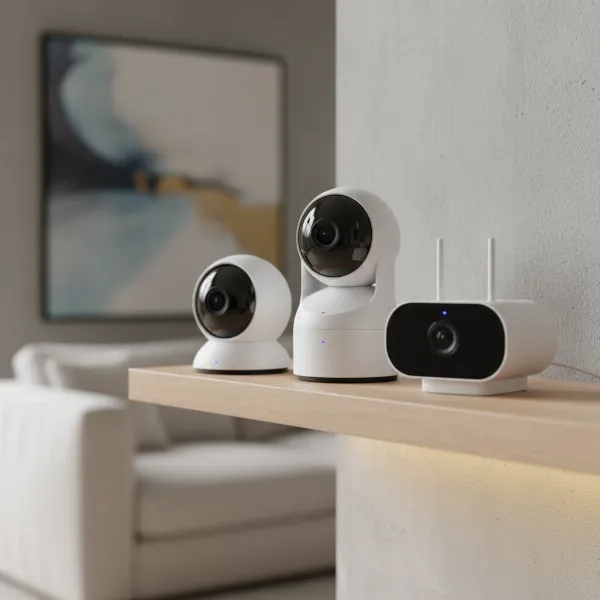 Various types of indoor security cameras, including a dome camera, a pan-tilt camera, and a compact bullet camera, arranged on a modern shelf in a home setting. Warm lighting, realistic style.
Essential Features of an Indoor Security Camera
When evaluating indoor security cameras, several key features contribute to their effectiveness and overall user experience. Prioritizing these aspects ensures you select a camera that truly meets your home security and monitoring needs.
Resolution and Image Quality
The clarity of your camera’s footage is paramount for identifying faces and objects. Most indoor cameras offer at least 1080p Full HD resolution, which is generally sufficient. However, for even sharper images and greater detail, consider models with 2K or 4K resolution. High-quality video is invaluable when reviewing footage or zooming in on specific details.
Field of View and Pan-Tilt Capability
The field of view determines how much area the camera can cover. A wide-angle lens, ideally 130° or more, allows a single camera to monitor an entire room effectively. For maximum coverage and flexibility, PTZ (Pan-Tilt-Zoom) functionality is a game-changer, enabling you to remotely adjust the camera’s angle through a mobile app and eliminate blind spots.
Night Vision
For 24/7 protection, night vision is a critical feature. Most cameras utilize infrared (IR) LEDs to provide clear black-and-white footage in low-light or complete darkness. Newer advancements include color night vision, which uses ambient light or specialized sensors to render more detailed, full-color images even at night, significantly improving visibility.
Motion Detection and Smart Alerts
Basic motion detection alerts you to movement, but advanced indoor cameras leverage AI-powered person detection to differentiate between humans, pets, and irrelevant movements like curtains swaying. This “smart detection” significantly reduces false alarms, ensuring you receive notifications only for events that truly matter, preventing alert fatigue and building trust in your system.
Data Storage (SD Card, Cloud)
Indoor cameras offer various storage options. Local storage typically involves a microSD card inserted directly into the camera or an NVR/DVR system, offering privacy and no ongoing fees but with limited capacity. Cloud storage provides remote access to footage from anywhere, often with more capacity, but usually requires a monthly subscription. Hybrid storage solutions, blending both local and cloud options, offer the best of both worlds, providing redundancy and flexibility.
Two-Way Audio
This feature transforms your camera from a passive observer into an interactive tool. With a built-in microphone and speaker, two-way audio allows you to listen in on your home and speak through the camera from your smartphone. It’s useful for communicating with family members, comforting pets, or deterring potential intruders with a verbal warning.
Connectivity and Remote Control
Most indoor security cameras connect via Wi-Fi, allowing for seamless integration with a mobile app for live viewing, reviewing recordings, adjusting settings, and receiving alerts. Look for compatibility with major smart home ecosystems like Amazon Alexa, Google Assistant, or Apple HomeKit if you wish to integrate your camera into a broader smart home setup for voice control and automation routines.
Comparison Table of Popular Indoor Security Cameras
Choosing an indoor security camera involves balancing features, performance, and price. Here’s a comparison of some popular models to help you identify what might be the best fit for your home.
| Feature | Wyze Cam v4 | Eufy Indoor Cam 2K | Google Nest Cam (Wired) | Arlo Essential Indoor |
|---|---|---|---|---|
| Resolution | 2K HD | 2K HD | 1080p HD | 2K HD |
| Field of View | 110° (fixed) | 125° (fixed) | 130° (fixed) | 130° (fixed) |
| Night Vision | Infrared | Infrared | Infrared (HDR) | Infrared |
| Motion Detection | Basic + AI | Basic + AI | AI (person, pet, object) | Basic + AI |
| Storage | Local (SD), Cloud | Local (SD), Cloud | Cloud (subscription) | Cloud (subscription) |
| Two-Way Audio | Yes | Yes | Yes | Yes |
| Smart Home | Alexa, Google | Alexa, Google, HomeKit | Google Assistant | Alexa, Google |
| Price Range | Budget-friendly | Affordable | Mid-range | Mid-range |
How to Choose Your Indoor Security Camera
Selecting the ideal indoor security camera requires careful consideration of your individual needs, your home’s layout, and your budget. Here’s a step-by-step guide to help you make a confident decision.
Determine Your Needs
Before diving into specifications, clarify what you want your camera to do. Are you primarily monitoring pets, keeping an eye on children, deterring intruders, or tracking home entries? If you live with pets, AI-powered person detection might be crucial to cut down on false alarms. For frequent travelers, cloud access and mobile control are essential. Your real-life use cases should always guide your selection.
Budget Considerations
Indoor camera prices vary significantly based on features, resolution, and brand. Higher resolution (2K, 4K), advanced smart features like AI detection, and premium brands often come with a higher price tag. Factor in potential ongoing subscription costs for cloud storage or advanced AI features, as these can add up over time. Some affordable cameras offer excellent basic functionality, while others justify their higher cost with robust features and seamless smart home integration.
Reputable Brands
Opting for well-established brands often provides greater reliability, better customer support, and more frequent firmware updates to address security vulnerabilities. Brands like Arlo, Google Nest, Eufy, Ring, and Wyze are frequently recommended for their performance and feature sets. Researching a brand’s reputation for privacy and data security is also important in this era of interconnected devices.
Review Technical Specifications
Once you’ve narrowed down your choices, pay close attention to the technical specifications. Ensure the resolution is at least 1080p for clear footage. Check the field of view to ensure adequate room coverage, and consider PTZ if you need broader surveillance. Evaluate night vision capabilities (infrared vs. color) and assess motion detection features, looking for smart alerts that can differentiate between types of movement.
Consult User Reviews
Reading reviews from other users can provide invaluable real-world insights into a camera’s performance, ease of installation, app functionality, and common issues. Look for consistent feedback regarding reliability, customer service, and how well the camera performs its advertised features in various home environments. This helps to set realistic expectations and avoid potential disappointments.
Warranty and Support
A good warranty and accessible customer support are essential. In case of technical issues or defects, knowing that the manufacturer stands behind its product and offers timely assistance can save you a lot of hassle. Check the duration of the warranty and the availability of support channels like phone, email, or live chat.
Top Picks: Best Indoor Security Cameras
After extensive testing and review, we’ve identified some top contenders that stand out for their blend of features, performance, and value, catering to various needs.
-
Arlo Essential Pan Tilt Indoor: This camera is consistently ranked highly for its exceptional performance. It offers sharp 2K video resolution, smooth mechanical pan-and-tilt controls for comprehensive room coverage, and AI-powered intelligent alerts that minimize false alarms. Its wide compatibility with smart home platforms and affordable price point make it an excellent overall choice for those seeking advanced monitoring capabilities.
-
Eufy Indoor Cam 2K: For users prioritizing local storage and advanced AI detection without mandatory subscription fees, the Eufy Indoor Cam 2K is a standout. It delivers crisp 2K video, offers local storage via an SD card, and includes AI detection that can differentiate between people and pets. Its two-way audio and integration with various smart home ecosystems add to its versatility, making it a robust and budget-friendly option.
-
Google Nest Cam (Indoor, Wired, 3rd Gen): If you’re deeply integrated into the Google ecosystem or value advanced AI features, the Google Nest Cam is a premium choice. It offers intelligent AI tools, including facial recognition and the ability to differentiate between people, pets, and objects, providing highly accurate alerts. While it typically requires a subscription for full access to recorded video and AI features, its seamless integration with Google Assistant and reliable performance make it a top pick for smart homes.
Conclusion
Choosing the right indoor security camera is a crucial decision for enhancing your home’s safety and your peace of mind. By understanding the various types available, prioritizing essential features like high-resolution video, smart motion detection, and flexible storage, and carefully considering your personal needs and budget, you can make an informed choice. Whether you opt for a feature-rich model with AI capabilities or a reliable camera with local storage, an indoor security camera serves as your vigilant eye, keeping you connected to your home no matter where you are.
What aspects of indoor home monitoring are most important to you when considering an indoor security camera?
Câu Hỏi Thường Gặp
What are the main differences between wired and wireless indoor security cameras?
Wired cameras offer a more stable and reliable connection, often with continuous recording, but require more involved installation due to physical cabling for power and data. Wireless cameras provide greater flexibility in placement and easier DIY installation by connecting via Wi-Fi, though their performance can depend on network strength and some battery-powered models need recharging.
Can indoor security cameras work without Wi-Fi?
Some indoor cameras can still record footage locally to a microSD card or a connected DVR/NVR system even without a Wi-Fi connection. However, a Wi-Fi connection is almost always required for remote viewing, receiving alerts, and controlling the camera via a smartphone app. Without Wi-Fi, many smart features become unavailable.
What resolution is recommended for an indoor security camera?
For clear and detailed footage that allows for easy identification of faces and objects, a minimum of 1080p Full HD resolution is recommended. For even sharper images and better digital zoom capabilities, many users opt for 2K or even 4K resolution cameras, though these typically come at a higher price point.
Are indoor security cameras safe from hacking?
While no internet-connected device is entirely immune to hacking, you can significantly enhance the security of your indoor camera. Always use strong, unique passwords, enable two-factor authentication (2FA) if available, and regularly update your camera’s firmware. Disabling remote access when not needed and securing your home Wi-Fi network are also crucial steps.
Can I use an indoor camera to monitor my baby?
Yes, many smart indoor cameras are excellent for baby monitoring, offering features superior to traditional baby monitors. Look for cameras with high-resolution video, clear night vision, two-way audio for communication, and sound detection (especially for crying alerts). The ability to access live footage and review video history remotely via a smartphone app adds significant convenience for parents.